











Global tech giants are set to spend over $635 billion on artificial intelligence in 2026, according to recent insights from S&P Global. This massive investment shows how critical AI has become for future growth. But there is a growing challenge many did not expect: energy supply. AI systems, especially large data centers, require huge amounts of electricity to run and cool advanced chips. As power demand rises, so do energy costs and risks.
Ongoing geopolitical tensions and rising oil prices in early 2026 are adding more pressure. This raises an important question: can Big Tech sustain its AI ambitions if energy becomes limited or too expensive?
The $635B AI Spending Boom: What’s Driving It?
From $80B to $635B, Explosive Growth
AI investment has grown at an unmatched pace. Spending was around $80 billion in 2019. It crossed $383 billion in 2025. Now, it is expected to exceed $635 billion in 2026, according to S&P Global. This sharp rise shows how AI has become central to business strategy. It also reflects strong demand for automation, cloud computing, and generative AI tools.
Key Players Fueling the AI Race
Major tech companies are leading this spending wave:
They are investing heavily in:
- AI data centers
- Advanced chips like GPUs
- Cloud infrastructure
Is AI Now an “Existential” Race?
Yes. For Big Tech, AI is no longer optional. It is critical for survival. Companies fear losing market share if they fall behind. This urgency is pushing record-level spending, even with rising risks.
Why Energy Is the Biggest Constraint on AI Growth?
Why Do AI Data Centers Use So Much Power?
AI data centers need massive amounts of electricity. A single AI rack can consume over 60 kW. Traditional systems use only 5-10 kW. GPUs also consume 2-4 times more power than CPUs. This makes AI infrastructure energy-intensive.
How Fast Is Electricity Demand Growing?
Electricity demand from data centers is rising quickly:
- It could double by 2030
- It may reach nearly 945 terawatt-hours globally
This is close to the total power use of countries like Japan.
How Do Oil Prices Affect AI Growth?
Energy costs depend on global markets. In early 2026, oil prices rose due to geopolitical tensions. This pushed electricity costs higher. As a result:
- AI operations became more expensive
- Profit margins started shrinking
Energy is now a key risk factor for AI expansion.
S&P Global Warning: AI Growth Faces an Energy Shock
Could High Energy Costs Slow AI Spending?
Yes. S&P Global warns that rising energy costs may force companies to reduce AI spending. High electricity prices can delay or cancel data center projects.
What Is Happening to Tech Stocks?
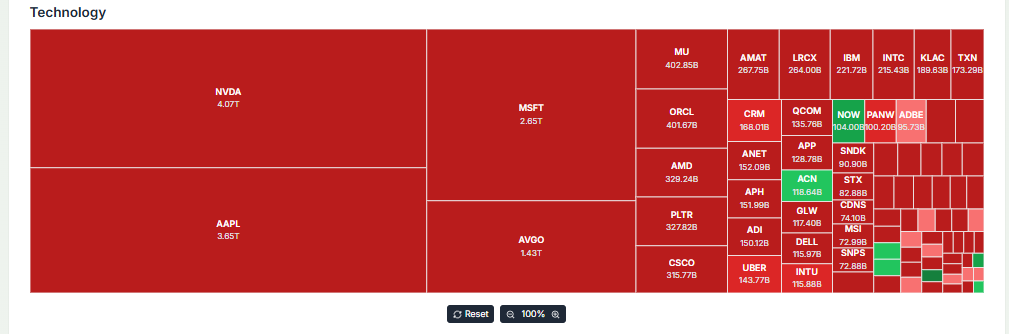
Tech stocks are showing volatility in 2026. Investors are concerned about:
- High capital spending
- Lower short-term returns
- Rising operating costs
This has slowed the AI-driven stock rally.
What are the Wider Economic Risks?
If AI spending slows, it can impact:
- Global economic growth
- Corporate earnings
- Innovation cycles
AI is a key driver of future productivity. Any slowdown can affect multiple industries.
Infrastructure Bottlenecks Beyond Energy
Many regions lack strong power grids. Data centers need reliable electricity. Delays in grid connections are slowing new projects.
What Supply Chain Issues Exist?
AI expansion also faces supply shortages:
- Transformers
- Gas turbines
- Skilled workers
These shortages increase costs and delay timelines.
Are Cooling Systems a Challenge?
Yes. AI chips generate more heat. This requires advanced cooling systems. Liquid cooling and new designs are being used. But they increase setup costs and complexity.
Financing Pressure: Debt, Bonds, and Rising Costs
Are Tech Companies Taking More Debt?
Yes. Big Tech is increasing borrowing to fund AI expansion. Debt issuance could reach $175 billion in 2026. This is higher than in previous years.
How Is Cash Flow Being Affected?
A large share of cash flow is going into capital spending. In some cases, it is close to 70%. This leaves less room for other investments.
Are Investors Becoming Cautious?
Investors are showing concern about:
- Long payback periods
- High upfront costs
- Uncertain returns
Many are using tools like an AI stock analysis tool to track risk and performance trends more closely.
Real-World Example: Meta’s $10B AI Data Center Bet
What Is Meta Building?
Meta Platforms is investing $10 billion in a new AI data center in Texas. The project aims to deliver around 1 gigawatt of capacity.
How Is Meta Managing Energy Needs?
Meta plans to add 5,000 MW of clean energy. This includes solar and wind projects. The goal is to reduce reliance on traditional power sources.
What are the Trade-Offs?
The project will create jobs and boost infrastructure. But it also raises concerns about costs and long-term returns.
Future Outlook: Can AI Growth Overcome the Energy Crunch?
Will Renewable Energy Solve the Problem?
Tech companies are investing in renewable energy. Solar, wind, and nuclear are key options. These can help stabilize costs over time.
What are “Island” Data Centers?
Some firms are building off-grid data centers. These use dedicated power sources. This reduces dependence on public grids.
Can Technology Improve Efficiency?
Yes. New chips and cooling systems are improving efficiency. AI optimization can also reduce energy use.
Is a Market Correction Possible?
If returns do not match spending, a correction may happen. Investors are watching closely as costs continue to rise.
Bottom Line
Big Tech’s AI expansion is no longer just about innovation. Energy has become the real test. Rising costs and supply limits are forcing companies to rethink strategies. While investments remain strong, sustainability is now critical. Firms that balance AI growth with smart energy planning will lead the next phase. The future of AI depends not only on data and chips, but also on reliable and affordable power.
Disclaimer:
The content shared by Meyka AI PTY LTD is solely for research and informational purposes. Meyka is not a financial advisory service, and the information provided should not be considered investment or trading advice.
What brings you to Meyka?
Pick what interests you most and we will get you started.
I'm here to read news
Find more articles like this one
I'm here to research stocks
Ask our AI about any stock
I'm here to track my Portfolio
Get daily updates and alerts (coming March 2026)