











Asian shares in the market opened on a strong note on Tuesday, January 13, 2026, as investor confidence improved across the region. The biggest spotlight was on Japan. Tokyo’s Nikkei index touched a historic all-time high, reflecting renewed optimism in global equities. This rally followed a powerful session on Wall Street, where U.S. stocks continued to trade near record levels.
The positive mood did not stay limited to Japan. Other Asian markets also moved higher as investors reacted to steady economic signals and strong performance in technology shares. Global markets are closely connected, and gains in the United States often set the tone for Asia’s trading day. This time was no different.
Currency movements, earnings expectations, and hopes of stable interest rates added to the momentum. Many investors see Asia as a key beneficiary of global growth trends, especially in technology and exports. While risks remain, the current market action shows how global confidence can quickly lift regional stocks.
Tokyo Takes Center Stage: Nikkei and Topix at New Peaks
On Tuesday, January 13, 2026, Japan’s key stock index, the Nikkei 225, sprinted to a fresh record. It climbed as much as 3.6% to 53,814.79, marking its highest level ever. The broad Topix index also hit an all-time peak, rising about 2.4%. Investors in Tokyo piled into stocks after global markets, especially in the U.S., showed strong gains.
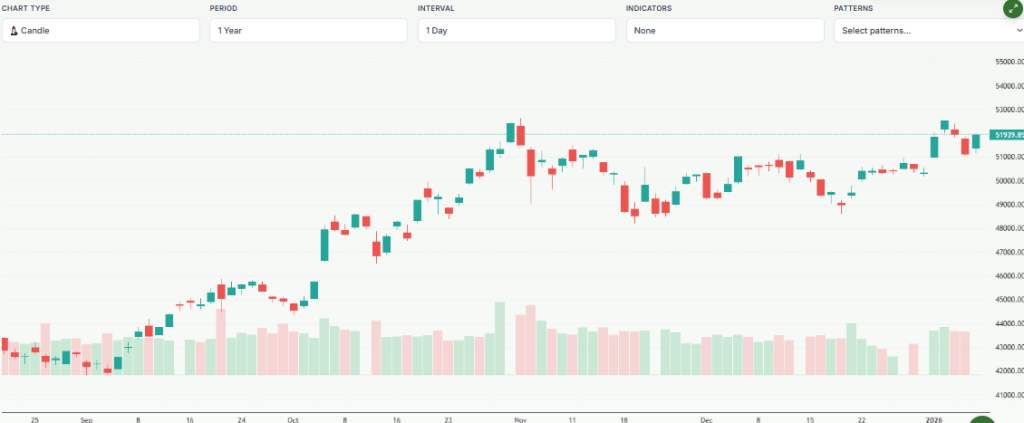
A weaker yen helped exporters like Toyota and chip-makers by making overseas income worth more in local currency terms. The moves reflected rising belief that Japan might soon see more government spending and support for economic growth.
Japan’s market rally was led by big names in tech and industrial sectors. Companies such as Advantest and Tokyo Electron posted large gains, while SoftBank Group also rose. These gains showed strong buying across sectors, not just in a few stocks. The record highs came as Tokyo caught up with the strong moves on Wall Street over the prior two trading sessions.
Wall Street Momentum Fuels Asian Shares Risk Appetite
Wall Street’s recent performance played a key role in Asia’s market mood. Major U.S. indexes, including the S&P 500 and Dow Jones Industrial Average, hit record highs just ahead of Asian trading. Rising confidence in technology and growth-oriented stocks helped spread optimism globally. This positive tone encouraged Asian investors to buy equities early in the trading day.
The link between U.S. market strength and Asian responses is clear. When U.S. stocks rally, investors elsewhere often take it as a sign that global growth is stable or improving. In this case, tech-led gains in the U.S. helped support Japan’s strong performance.
Regional Market Reaction: Mixed Yet Mostly Higher
Across Asia, most markets showed gains on January 13, 2026, but performance varied. South Korea’s Kospi also hit new highs, driven by strong earnings prospects and demand for tech products. Taiwan’s benchmark index climbed, reflecting buying interest in semiconductor names. Hong Kong’s Hang Seng advanced too, helped by a surge in new listings, including a chip designer that soared more than 50% on its debut.
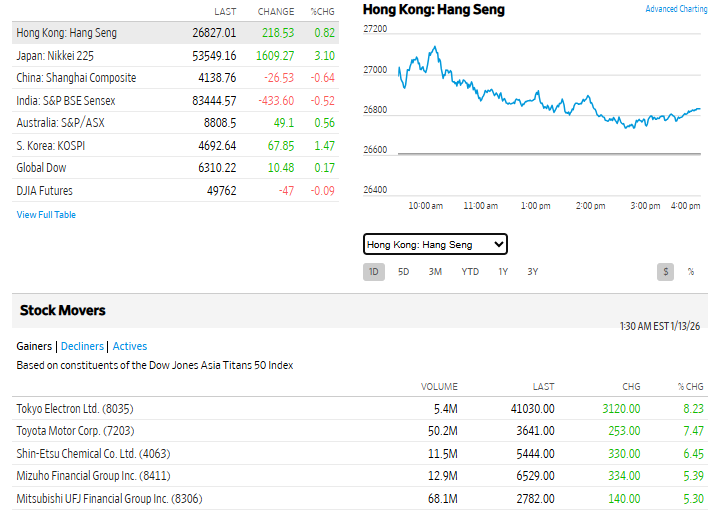
However, not all markets moved up. Mainland China’s Shanghai Composite edged slightly lower, as some investors stayed cautious over economic growth data. India’s Sensex dipped by a small amount, showing that strength in Japan and some Asian markets did not spread uniformly.
Key Drivers Behind the Asian Shares Rally
One of the key factors pushing markets higher was the weaker Japanese yen. A soft yen boosts Japanese exporters because their profits in foreign currencies convert to more yen. This made companies like Toyota and Tokyo Electron more attractive to buyers.
Another factor was speculation about fiscal policy in Japan. Reports suggested that Prime Minister Sanae Takaichi might call a snap general election as early as late January or early February to seek a stronger government mandate. Investors interpreted this as a possible sign of bigger stimulus and spending plans that could support corporate profits and broader growth.
Across the region, earnings expectations and strong demand for technology and semiconductor products supported stock prices. Companies tied to global tech supply chains benefited from momentum in AI and chip spending. While currency and macro risks remain, these trends helped keep sentiment positive.
Risks and Market Watch Points for Asian Stocks
Despite strong gains, risks still loom. Currency volatility, especially sharp moves in the yen and dollar, could sway markets. Economic data, inflation reports, and central bank actions will also influence sentiment in the coming weeks. Investors must watch for signs of slowing growth or tightening policy that could cool markets.
Geopolitical tensions and shifts in trade policy remain potential drivers of volatility, too. Any unexpected events could shift risk sentiment quickly, especially if they affect trade flows or investor confidence.
Conclusion: Global Signals Lift Asia
The broad trend on January 13, 2026, showed that global market cues are increasingly linked. Strong performances in Wall Street indices helped fuel gains in Asia, with Tokyo leading the charge. Japan’s record highs and sector-wide gains highlighted renewed investor appetite for equities.
Still, mixed results in some regional markets and macro risks suggest caution. Markets may stay volatile, but the current rally reflects a strong belief in growth prospects for key sectors and economies across Asia.
Frequently Asked Questions (FAQs)
Asian shares rose on January 13, 2026, after Wall Street closed higher. Strong U.S. tech stocks improved global mood and encouraged investors to buy equities across Asian markets.
Japan’s Nikkei hit a record as a weaker yen helped exporters. Strong demand for technology stocks and positive global signals also supported buying interest.
Asian markets may remain mixed. Global growth signals and earnings support prices, but changes in rates, currencies, or data could cause short-term market swings.
Disclaimer
The content shared by Meyka AI PTY LTD is solely for research and informational purposes. Meyka is not a financial advisory service, and the information provided should not be considered investment or trading advice.
What brings you to Meyka?
Pick what interests you most and we will get you started.
I'm here to read news
Find more articles like this one
I'm here to research stocks
Ask our AI about any stock
I'm here to track my Portfolio
Get daily updates and alerts (coming March 2026)