Asian shares opened higher on February 10, 2026, as a powerful post-election rally in Japan lifted investor confidence across the region. Japan’s Nikkei 225 jumped to a fresh record high, driven by strong buying in technology, financial, and export-focused stocks.
The surge followed Sunday’s decisive national election, which delivered political clarity and raised hopes for bold economic reforms. This upbeat mood quickly spread to other Asian markets, pushing shares in Hong Kong, South Korea, China, and Australia into positive territory.
Advertisement
Traders welcomed the shift toward stability, improved policy direction, and renewed growth optimism. With global markets also showing signs of strength, Asian equities found fresh support. The question now is whether this momentum can last or if short-term gains will face new tests ahead.
Japan Leads Asia Higher After Historic Election Victory
Nikkei Hits New Record on Reform Expectations
Japan’s stock market delivered a powerful rally after the February 9, 2026 general election, which gave Prime Minister Sanae Takaichi a historic landslide victory. The Nikkei 225 surged 2.6% to 57,821.58 on February 10, 2026, following a massive 3.9% jump the previous day, marking two straight record-breaking sessions.
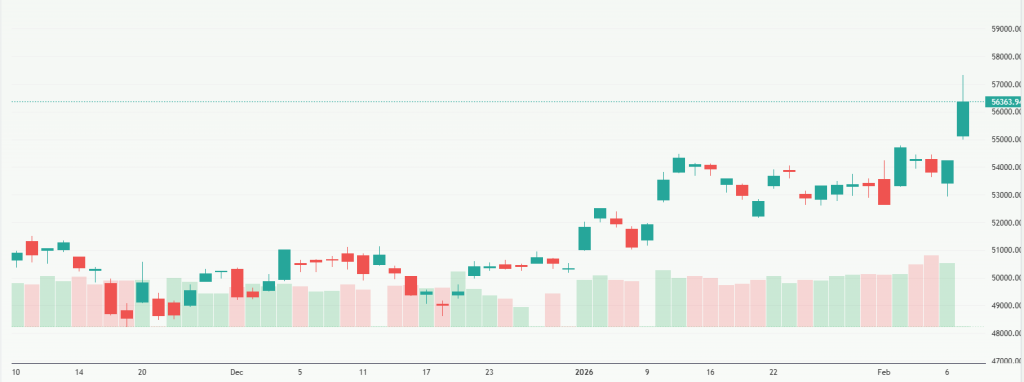
This sharp rise reflected strong investor optimism about upcoming economic reforms. Takaichi has promised a ¥21 trillion ($142 billion) stimulus plan, two-year suspension of the 8% food sales tax, and major infrastructure investments aimed at boosting growth and consumption.
Market participants quickly priced in faster economic recovery, improved corporate earnings, and renewed domestic demand. Exporters, technology firms, and financial stocks led gains, driven by expectations of higher government spending and tax incentives.
According to the Associated Press, this was one of Japan’s strongest post-election market reactions in decades, signaling renewed global investor interest in Japanese equities.
Political Stability Restores Investor Confidence
The ruling Liberal Democratic Party (LDP) secured 316 of 465 parliamentary seats, giving Prime Minister Takaichi a two-thirds majority, a rare political mandate in modern Japanese history. This decisive result significantly reduced policy uncertainty and strengthened confidence in long-term economic planning.
Investors welcomed the stability, seeing it as a green light for faster legislative approvals of tax reforms, stimulus packages, and business-friendly regulations. The Japanese yen strengthened modestly against the U.S. dollar, reflecting renewed foreign capital inflows.
However, concerns remain. Japan’s public debt already exceeds 250% of GDP, raising questions about fiscal sustainability. Government bond yields rose to 2.28%, signaling market caution toward aggressive spending. Still, in the short term, political clarity continues to dominate investor sentiment.
Asian Markets Rally in Sympathy With Japan’s Surge
Regional Index Performance Snapshot
Japan’s post-election surge quickly spilled into broader Asian markets. On February 10, 2026, major regional benchmarks closed higher:
- Hang Seng (Hong Kong): +1.0% to 27,300
- Kospi (South Korea): +0.6% to 5,327.80
- Shanghai Composite (China): +0.2% to 4,130.20
- ASX 200 (Australia): +0.3% to 8,893.60
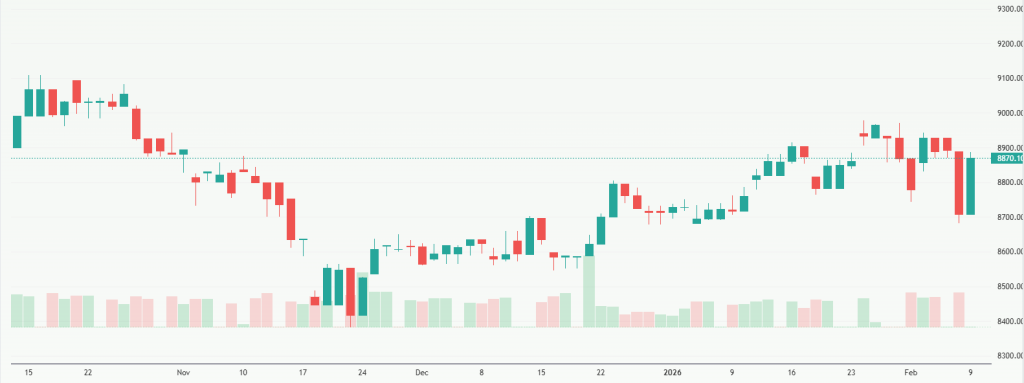
The rally reflected growing confidence that Japan’s stimulus could lift regional trade, exports, and corporate earnings. Export-driven economies such as South Korea and Australia benefited from expectations of higher Japanese import demand.
Global fund managers also rotated capital back into Asia, responding to improving growth prospects and falling currency volatility.
Tech & Export Stocks Regain Leadership
Technology and export-focused stocks dominated trading volumes across Asia. Semiconductor firms in Japan and South Korea rebounded sharply, driven by renewed demand expectations and AI-linked investments.
Major gainers included Japanese chip testing firms and South Korean technology giants, as investors returned to high-growth sectors. Export-oriented manufacturers also attracted strong buying due to a weaker yen, which improves overseas revenue competitiveness.
According to Investing.com, analysts believe the political clarity has strengthened confidence in long-term industrial and digital transformation policies, which could support technology stocks throughout 2026.
This sector rotation highlights rising confidence in Asia’s technology-led growth cycle.
Global Factors Amplifying Asia’s Market Momentum
Wall Street Optimism and Dollar Weakness
Asian equities found further support from positive signals in U.S. markets. The S&P 500 gained 0.5%, nearing record highs, while the Nasdaq rose 0.9%, led by strong performance in technology stocks.
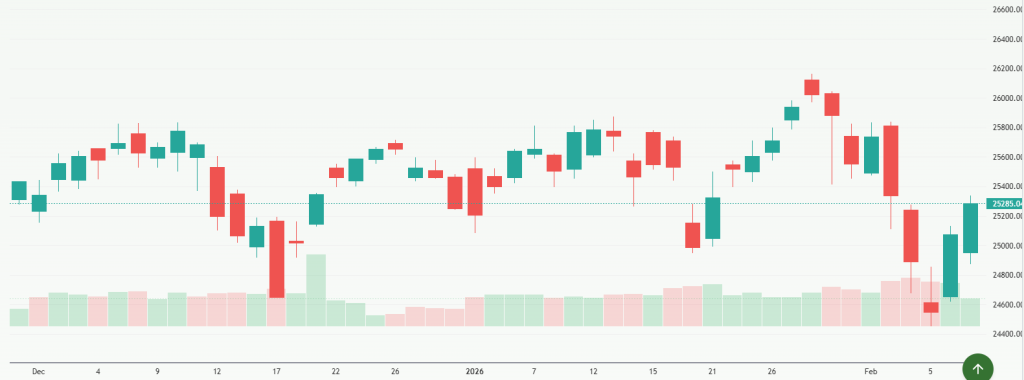
Meanwhile, the U.S. dollar weakened, making emerging market assets more attractive. This shift encouraged global investors to increase exposure to Asian equities, particularly in Japan, South Korea, and China.
According to Reuters, the MSCI Asia-Pacific Index excluding Japan rose 0.6%, confirming broad-based market participation across the region. Lower bond yields and easing inflation expectations further boosted risk appetite.
Ashian Shares: Fed Rate-Cut Expectations Support Stocks
Market participants increasingly expect the U.S. Federal Reserve to begin rate cuts by mid-2026, based on easing inflation and slower job growth. Futures markets now assign a high probability to at least one cut by June 2026.
Lower global interest rates typically improve liquidity and encourage capital flows into equities, especially in emerging markets. This outlook has strengthened demand for Asian stocks, particularly in high-growth sectors such as technology, finance, and renewable energy.
As borrowing costs decline, corporate investment and consumer spending could rise, further supporting earnings momentum across Asia.
Investor Focus: What’s Driving the ‘Takaichi Trade’?
Fiscal Expansion & Consumption Boost
The so-called “Takaichi Trade” centers on expectations of aggressive fiscal reforms. Investors anticipate:
- Large-scale infrastructure spending
- Corporate tax incentives
- Two-year food sales tax suspension
- Wage growth support
These policies aim to revive domestic consumption and reduce Japan’s long-standing deflationary pressures. Analysts believe these measures could push GDP growth above 2% in 2026, significantly higher than recent averages.
According to MarketWatch, foreign investors are rapidly increasing exposure to Japanese equities, betting on sustained policy-driven growth.
This optimism is also supported by insights from the AI stock analysis tool Meyka, which identifies rising momentum, improving technical indicators, and strong institutional buying trends in major Japanese indices.
Risks: Debt Levels & Inflation Pressure
Despite optimism, risks remain. Japan’s public debt stands above ¥1,300 trillion, creating concerns about long-term fiscal sustainability. Rising government bond yields suggest growing caution among fixed-income investors.
Inflation pressure could also limit policy flexibility. If consumer prices accelerate beyond expectations, stimulus measures may face resistance. Analysts warn that excessive spending could weaken the yen further, increasing import costs and squeezing household budgets.
Still, most strategists believe that near-term economic gains outweigh long-term fiscal risks, keeping equities well-supported.
Market Outlook: Can Asian Shares Sustain the Rally?
Asia’s short-term market outlook remains constructive, driven by political clarity in Japan, improving U.S. monetary conditions, and stable global growth signals. However, sustainability depends on several factors:
- Continued economic recovery in China
- Controlled inflation in Japan
- Stability in global bond markets
- Absence of major geopolitical shocks
Investors are likely to favor Japanese equities, Asian technology stocks, exporters, and financials, which benefit most from economic reflation. While volatility may appear, analysts expect the broader uptrend to remain intact through the first half of 2026.
Conclusion: Japan’s Political Reset Ignites New Momentum for Asian Stocks
Japan’s post-election surge has reshaped Asia’s market outlook. The Nikkei’s record-breaking rally has restored confidence across regional markets and encouraged renewed foreign investment.
Political stability, bold fiscal plans, and supportive global liquidity have combined to create a powerful growth narrative. While risks from debt and inflation persist, investor optimism remains strong.
As global funds rebalance portfolios, Japan is once again emerging as Asia’s primary growth engine, with its political transformation likely shaping market trends throughout 2026.
Advertisement
Frequently Asked Questions (FAQs)
Asian shares rose on February 10, 2026, after Japan’s stock market surged to record highs following election results, boosting investor confidence, risk appetite, and expectations for strong regional economic growth.
Japan’s Nikkei reached a record high on February 10, 2026, as investors welcomed the election victory of Prime Minister Sanae Takaichi, expecting major stimulus, tax relief, and stronger economic reforms.
Japan’s election result on February 9, 2026, improved political stability, lifted investor sentiment, and encouraged buying across Asian markets, leading to gains in Hong Kong, South Korea, China, and Australia.
Disclaimer:
The content shared by Meyka AI PTY LTD is solely for research and informational purposes. Meyka is not a financial advisory service, and the information provided should not be considered investment or trading advice.
Advertisement
What brings you to Meyka?
Pick what interests you most and we will get you started.
I'm here to read news
Find more articles like this one
I'm here to research stocks
Ask our AI about any stock
I'm here to track my Portfolio
Get daily updates and alerts (coming March 2026)