











Asia stocks in financial markets are showing fresh signs of stress in early March 2026 as investors grow more cautious amid a widening conflict involving Iran. Asian stocks slipped through the week, pressured by rising geopolitical tensions and energy market shocks that have pushed Brent crude above $100 per barrel again. This sell‑off isn’t just noise, key indexes in Japan, South Korea and Hong Kong all closed lower as worries over global growth and inflation mounted.
Traders are now weighing how prolonged Middle East instability could reshape market trends, slow economic recovery and redraw risk appetites across Asia‑Pacific markets.
Asia Stocks Slide Toward Weekly Losses as Iran War Keeps Investors Cautious
Asia Markets Today: Key Moves and Data
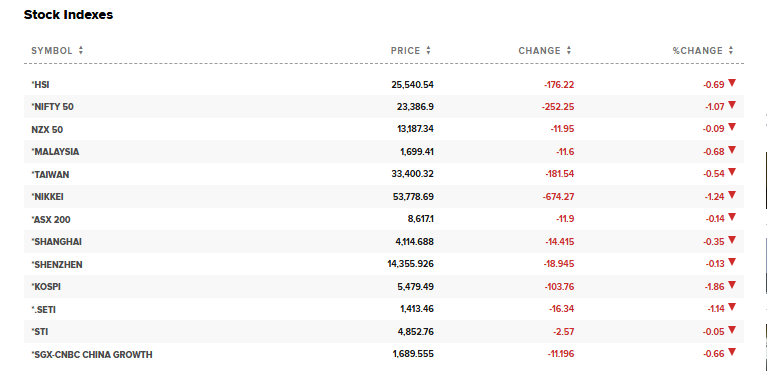
Asian equity markets continued their downward trend this week as geopolitical dangers from the Iran conflict and rising energy costs pressured investors. On Friday, major Asian indices finished lower, putting the region on track for a second consecutive weekly loss. MSCI’s Asia‑Pacific Index fell about 0.5%, Japan’s Nikkei 225 traded down 1.3%, and South Korea’s Kospi declined around 2% in the final session. Taiwan’s market also weakened, while Hong Kong’s Hang Seng eased modestly. Meanwhile, Australia’s S&P/ASX 200 bucked the broader trend with a small gain.
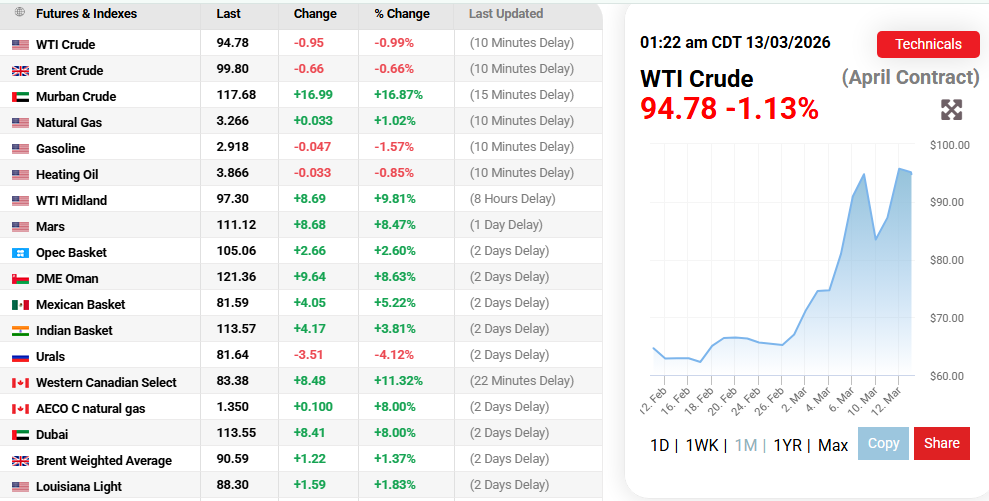
Oil remained a central shock point for markets. Brent crude oil hovered near the $100‑per‑barrel mark, and West Texas Intermediate crude traded just below $95, as threats to key Middle East supply routes kept prices elevated. This surge in energy costs reinforced inflation fears and eroded optimism around potential rate cuts.
Investors also shifted into safety assets, with the U.S. dollar strengthening and bonds seeing inflows, reflecting heightened risk aversion. Global market volatility increased as traders balanced economic data with geopolitical uncertainty.
What’s Driving the Sell‑off: Geopolitical and Macro Pressures?
How Is the Iran War Affecting Markets?
The U.S.-Israel military campaign against Iran has escalated supply risk concerns in global energy markets, particularly around the Strait of Hormuz, a route responsible for about one‑fifth of world oil trade. These geopolitical disruptions pushed Brent crude near $100 per barrel, spiking inflation expectations and adding pressure on equities sensitive to input cost rises.
The International Energy Agency (IEA) reported that oil supply could drop sharply as producers cut output and tanker movements slow, underscoring the conflict’s impact. Lower output and looming supply bottlenecks have driven a palpable risk premium into energy prices, increasing costs for Asian importers heavily reliant on Middle Eastern crude.
Are Investors Fleeing Risk Assets?
Heightened uncertainty has led to broad risk‑off positioning. Traders are allocating more to safe haven assets like the U.S. dollar and government bonds. Equity risk premiums have widened, reflecting expectations that central banks may delay rate cuts because of inflationary pressures from oil price spikes. Markets now price a reduced likelihood of near‑term rate easing by major central banks, influencing global yield curves and investment flows.
Macro Crosswinds: Rates, Inflation, and Global Signals
What Are Central Banks Thinking?
With energy prices elevated and inflation risks rising, markets now anticipate that central banks will hold rates steadier for longer. Before the recent sell‑off, investors had priced in potential rate cuts from major economies including the United States and Europe, but these expectations have diminished as benchmarks like Brent oil stay elevated. Persistently high energy costs can keep underlying inflation stubborn, making rate pivots less likely until clearer data emerges.
How are Global Markets Reacting?
Asia’s weakness reflects a global slump as European equities also record steep weekly losses amid energy price pressures. This marks some of the worst performances since early 2025. U.S. stocks, while down, have outperformed many global peers, showing relative resilience despite jobs data disappointments and Iran war pressures. The contagion of risk aversion has flowed from energy markets and inflation expectations into equity valuations across regions.
Case Studies: Regional Market Highlights
Japan and Korea, Tech and Export Pressures
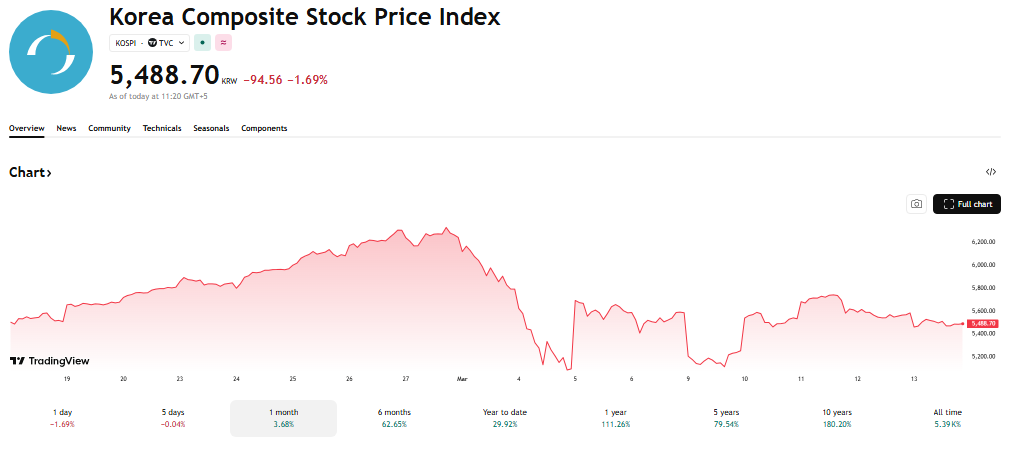
Japan’s stock market has been trending lower as export‑linked firms and manufacturing stocks bear the impact of weaker global risk appetite and higher energy costs. South Korea’s Kospi also fell sharply this week, reflecting pressure on both consumer demand and tech exports. Risk‑off sentiment has hit semiconductor and hardware sectors particularly hard, even as some analysts note longer‑term structural resilience in regions with strong industrial bases.
Emerging Markets, India and Beyond
In India, volatility spiked as benchmark indices dipped into deeper weekly losses, with sentiment weighed down by global risk aversion, currency weakness, and rising bond yields. Foreign institutional investors continued outflows as investors recalibrated portfolios in light of geopolitical risks. Other emerging Asian markets, while varied, generally saw heightened volatility as capital rotated toward safer assets.
Asia Stocks: Investor Strategies in Times of Turbulence
During market stress, many investors adopt defensive postures aimed at preserving capital. Increasing cash allocations and rotating into defensive sectors such as utilities and consumer staples remain common tactics. Some traders use AI‑enhanced analysis tools for real‑time risk assessment to improve entry and exit timing under volatile conditions. Hedging with options, focusing on short‑duration fixed income, or diversifying into assets like gold can also provide ballast.
Active risk monitoring and clear exposure limits are key. Tactical approaches that incorporate macro trends, especially around energy prices and policy shifts from central banks, help align portfolios with evolving market realities. Timing matters, but so does preparation and discipline in managing downside risk.
Conclusion
Asian stocks are under pressure as the Iran conflict and elevated oil prices dampen investor sentiment. Key indices have slid toward weekly losses amid rising inflation fears and slower rate‑cut expectations. In this uncertain environment, understanding macro forces, geopolitical triggers, and tactical risk management is essential for markets navigating heightened volatility and shifting global trends.
Frequently Asked Questions (FAQs)
Asia stocks are down in March 2026 because oil prices jumped above $100 after the Iran war raised energy and inflation fears. Global risk appetite dropped and investors sold stocks to safer assets as tensions disrupted trade.
The Iran conflict has cut oil flows near the Strait of Hormuz. Oil prices surged over 25%, lifting inflation worries worldwide.
South Korea’s Kospi and Japan’s markets are falling most because they rely on exports and energy imports hit by rising crude costs.
Disclaimer:
The content shared by Meyka AI PTY LTD is solely for research and informational purposes. Meyka is not a financial advisory service, and the information provided should not be considered investment or trading advice.
What brings you to Meyka?
Pick what interests you most and we will get you started.
I'm here to read news
Find more articles like this one
I'm here to research stocks
Ask our AI about any stock
I'm here to track my Portfolio
Get daily updates and alerts (coming March 2026)