











Asia stocks market slid sharply in early March 2026 as investors grappled with rising geopolitical risk and uneven economic signals. On March 4, South Korea’s Kospi plunged more than 12%, marking its worst day in history, while Japan’s and other regional indices also retreated amid heightened tension in the Middle East and fears of higher energy costs. China’s latest factory data added to the uncertainty, official PMI figures showed contraction in February, even as private surveys pointed to stronger external demand.
This blog explores how Iran tensions, mixed China PMIs, and rising oil prices are shaping investor sentiment and pressuring Asian markets. Let’s understand what’s driving the sell‑off and what it could mean for markets in the days ahead.
Major Downturn in Asia Stocks Today
Asian share markets slid sharply in early March 2026 as investors reacted to rising geopolitical tensions in the Middle East and fears of an energy shock. Continued conflict involving the United States, Israel, and Iran has increased risk‑off sentiment across global markets.
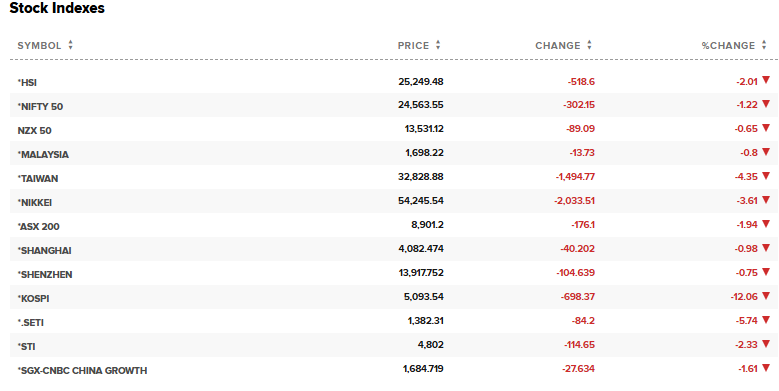
South Korea’s Kospi plunged around 12% on March 4, marking its worst single‑day drop on record and wiping out more than $550 billion in market value. Major names like Samsung Electronics, SK Hynix, and Hyundai saw heavy losses as foreign investors exited positions. The Korean won also fell to its weakest point in nearly 17 years. These moves reflect investor concern about how rising oil costs and inflation might affect corporate profits and economic growth in energy‑dependent Asian economies.
Regional indices beyond South Korea also suffered losses. Japan’s Nikkei dropped around 3.9%, Hong Kong’s Hang Seng fell more than 2.9%, and Taiwan’s Taiex slid about 4.4%, extending declines seen earlier in the week. Rising oil prices, which have climbed over 13% since the conflict began, have heightened worries that inflation could remain elevated and delay potential interest rate cuts by central banks in key markets.
Why are Stocks Falling? Iran Tensions and Oil Prices
The sell‑off is largely linked to fears of wider conflict and disruptions to key energy routes. The Strait of Hormuz, through which a significant portion of the world’s oil shipments pass, has seen reduced traffic as tensions escalate. A threat of closure or intermittent disruption raises the risk of supply constraints that can push energy prices higher and burden import‑reliant countries.
Brent crude has traded above $80 per barrel due to these risks, underscoring how geopolitics can swiftly affect commodities and equities alike. Investors often flee risk assets like stocks and rotate into safer assets such as gold, the U.S. dollar, and government bonds when uncertainty spikes.
China’s Mixed PMI Signals
China’s February Purchasing Managers’ Index (PMI) data delivered mixed signals that added to market uncertainty.
What Do China’s Official PMI Numbers Show?
China’s official manufacturing PMI fell to 49.0 in February 2026, down from 49.3 in January and marking the second straight month of contraction. A PMI reading below 50 indicates that factory activity is shrinking, which suggests weak domestic demand and subdued investment activity across larger, state‑owned firms.
The official non‑manufacturing PMI also remained below the expansion threshold, showing ongoing contraction in services and construction sectors. Analysts said the figures were influenced partly by the extended Lunar New Year holiday, which disrupted production and business activity.
The official composite PMI, combining both manufacturing and services activity, also dipped, implying that overall business conditions remain soft despite some support from exports. Continued contraction pressures could prompt policymakers in Beijing to consider additional monetary or fiscal stimulus to revive demand if trends persist.
What Does the Private PMI Suggest?
In contrast, the private‑sector RatingDog China General Manufacturing PMI rose to 52.1 in February 2026, the fastest expansion in more than five years. This survey focuses on smaller, export‑oriented firms and shows robust growth in new orders, especially exports, and output. The disparity between the private survey and the official PMIs highlights the uneven nature of China’s economic recovery: private exporters are performing well, while larger domestic sectors remain weak.
Economists note that this divergence matters. Strong external demand could help offset some domestic weakness, but inconsistent data complicates forecasting. Some analysts use AI‑based PMI analysis tools to blend multiple surveys into a broader view of economic health, helping investors interpret the mixed signals.
How Geopolitics Is Affecting Investor Behavior?
Why are Traders Moving to Safe Havens?
As tensions in the Middle East escalate, traders are increasingly shifting toward assets considered safer during periods of instability. Gold prices have risen alongside the conflict as investors seek to protect capital. The U.S. dollar has strengthened, and yields on government bonds have climbed as risk appetite falls. These moves are typical in risk‑off environments when equities appear vulnerable due to rising costs or uncertainty over future economic conditions.
High energy prices feed into inflation expectations, potentially deterring central banks, like the U.S. Federal Reserve, from cutting interest rates soon. Sustained inflationary pressure can reduce consumer spending power and corporate earnings, which further weighs on stock markets.
Which Sectors are Most Affected in Asia Stocks?
Energy‑importing economies in Asia, such as South Korea and Japan, are feeling the strain most acutely. Tech and export‑oriented sectors have also been hit as investors reduce exposure to riskier assets. Airlines and travel stocks have fallen sharply, partly due to rising fuel costs and operational disruptions. Conversely, defense stocks and some energy producers may see relative strength as geopolitical risk premiums and spending increase.
What Comes Next for Asia Stocks Market?
The path ahead for Asian markets is uncertain. Key economic releases, such as China’s upcoming trade balance figures, further PMI data, inflation reports, and central bank policy statements, will be closely watched by investors. Any signs of easing geopolitical tensions or stabilizing energy markets could reduce volatility. However, if military conflict persists and oil prices remain elevated, markets may continue to price in risk and inflation premiums.
Investors should pay attention to shifts in foreign investment flows, currency movements, and central bank guidance on interest rates. A sustained decline in equities could trigger policy responses aimed at stabilizing markets. On the other hand, strong export performance from China’s private sector and resilient demand abroad could provide an offsetting cushion for regional economies.
Final Words
Amid deepening geopolitical tensions and mixed PMI data from China, Asia stocks market are navigating a complex risk landscape. Investors are adjusting exposure to stocks, commodities, and safe‑haven assets as rising oil prices and divergent economic signals influence sentiment, highlighting the need for careful monitoring of energy flows and economic indicators.
Frequently Asked Questions (FAQs)
Asian stocks dropped in early March 2026 due to rising Iran tensions and weak economic signals from China. Investors sold shares, fearing higher oil costs and slower growth.
The Iran conflict is pushing oil prices up. Higher oil costs raise inflation fears. Investors are cautious, selling stocks and buying safe assets like gold and the U.S. dollar.
China’s official PMI shows factory slowdown, while private PMI shows growth. This signals uneven recovery. Investors are uncertain, balancing risks from weak domestic demand and strong exports in March 2026.
Disclaimer:
content shared by Meyka AI PTY LTD is solely for research and informational purposes. Meyka is not a financial advisory service, and the information provided should not be considered investment or trading advice.
What brings you to Meyka?
Pick what interests you most and we will get you started.
I'm here to read news
Find more articles like this one
I'm here to research stocks
Ask our AI about any stock
I'm here to track my Portfolio
Get daily updates and alerts (coming March 2026)