Asia Stocks Rise as Tech Gains Offset Rate Uncertainty; ASX, KOSPI Hit Record High
Asia stocks market kicked off Thursday, 19 February 2026, with strong gains as major indices climbed to fresh peaks. Tech stocks led the charge, helping key benchmarks like Australia’s ASX 200 and South Korea’s KOSPI reach record highs, even as investors balanced concerns about interest rates and geopolitics.
The rally was powered by renewed optimism in the semiconductor and technology sectors after Wall Street’s tech rebound, while local sectors such as mining and banking also contributed to the upside.
Advertisement
Rising oil prices and safe‑haven demand for gold added complexity to the market mood, but broadly positive sentiment pushed Asian equities higher. Traders now watch whether this momentum can last amid mixed economic cues and evolving global risks.
Asia Stocks Market Rally as Tech Gains Offset Rate Uncertainty
Regional Stock Market Rally Explained
On February 19, 2026, Asian stock markets climbed strongly. Markets were lifted mainly by gains in technology shares and upbeat global sentiment. Investors reacted to strong Wall Street tech performance and dipped their toes back into riskier assets despite ongoing concerns over interest rates and geopolitical risks.
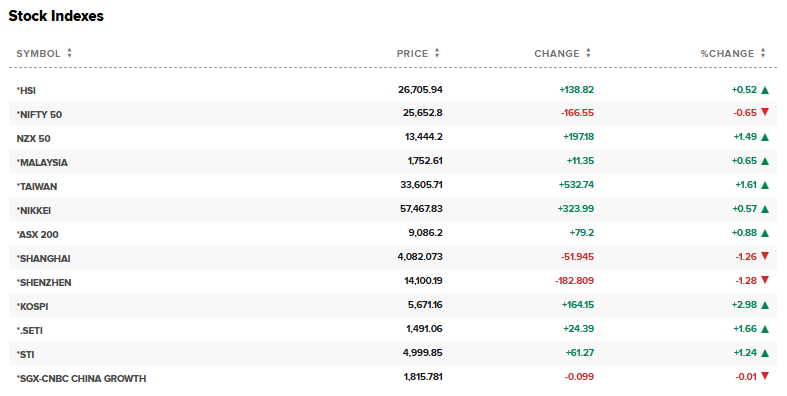
Trading in some Asian markets was light due to Lunar New Year holidays in Hong Kong, China, and Taiwan. The MSCI Asia‑Pacific Index rose about 0.5%, and Japan’s Nikkei 225 climbed around 0.85%, led by technology stocks. South Korea’s KOSPI surged roughly 3% to a fresh record high.
Asian markets largely mirrored positive moves on Wall Street, where technology majors posted gains. NVIDIA’s chip‑related deals boosted sentiment after Wall Street showed strength in tech sectors, helping influence Asian markets despite interest rate concerns.
South Korea – Why Did the KOSPI Hit Record Highs?
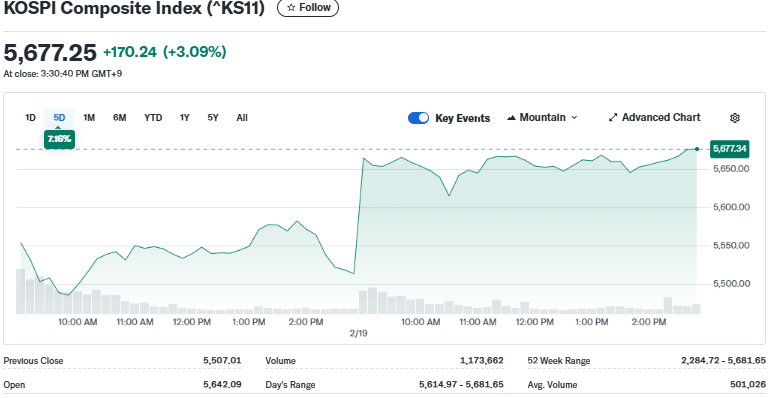
South Korea’s KOSPI index was the standout performer in the region on Feb 19. The benchmark index climbed nearly 3%, reaching an all‑time high near 5,673 points.
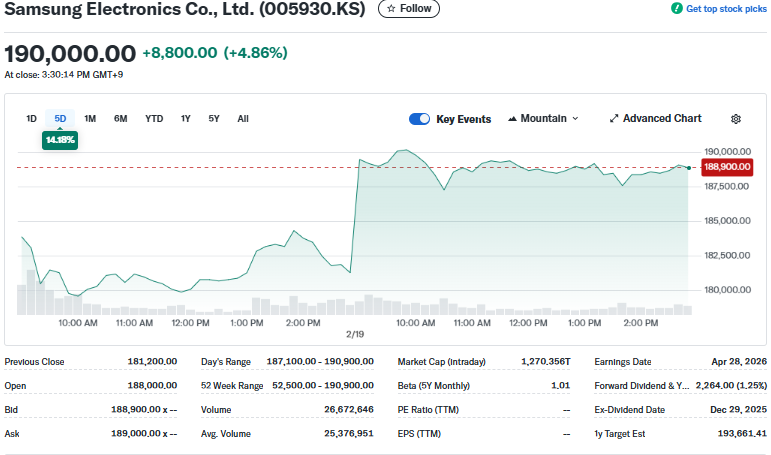
The rally was driven by strong gains in chip and tech stocks. Samsung Electronics jumped more than 4% after reports that it will increase prices on advanced memory chips due to strong demand from the artificial intelligence sector. Samsung has also begun mass production of HBM4 AI memory chips, which are crucial for AI systems.
SK Hynix and other Korean tech firms also pushed higher, supported by robust global demand for AI‑linked infrastructure and potential chip shortages, which are allowing makers to raise prices and improve earnings.
This broad tech strength helped offset weaker trade data and supported investor confidence in South Korea’s export‑linked economy.
Australia – ASX 200 Reaches New Highs
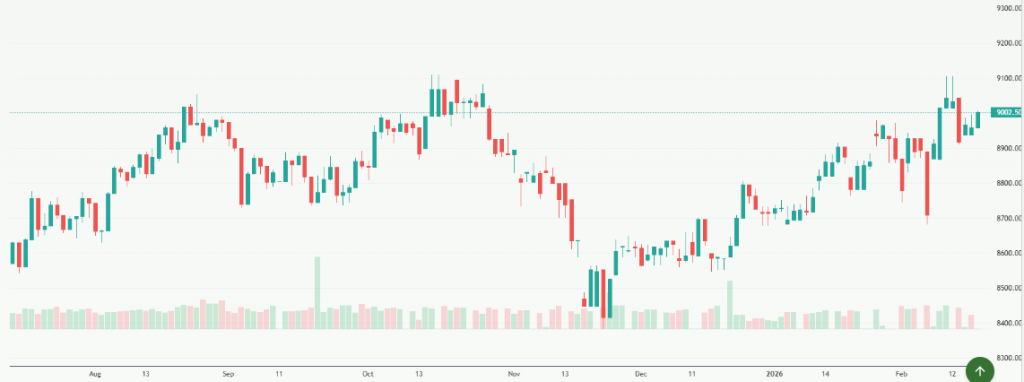
Australia’s ASX 200 also hit a new peak on Feb 19, climbing above 9,118 points. Unlike Korea, the ASX rally was led by strong performances in mining and banking stocks. Major miners such as Rio Tinto rose over 2% after announcing increased investment in a Canadian lithium venture.
Australia’s big four banks, ANZ, Westpac, Commonwealth Bank of Australia, and National Australia Bank, all saw gains between 1.3% and 3%.
Softer‑than‑expected rise in January employment numbers also helped support markets. The data suggested the Reserve Bank of Australia may feel less pressure to tighten monetary policy quickly.
Asia Tech Sector Lift & Wall Street Influence
How Did Wall Street Impact Asian Markets?
Asian markets have stayed tightly linked with U.S. stock performance. On Feb 18 and 19, U.S. indices like the S&P 500, Nasdaq, and Dow Jones were positive, especially in tech sectors. Strong performance by tech heavyweights helped lift investor sentiment in Asia. Wall Street’s tech strength was partly supported by AI developments and large‑scale chip deals involving firms such as Nvidia and Meta.
These positive U.S. signals helped Asian markets brush aside weaker signals from the Federal Reserve’s latest minutes, which showed policymakers were not ready to cut rates yet. A firm U.S. dollar reflected that view, yet equities found support due to strong tech earnings and global AI demand.
Investors using an AI stock analysis tool noted that many Asian tech companies now have higher AI‑driven revenue forecasts than earlier in the year, adding to positive sentiment.
Rate Uncertainty and Macro Headwinds
What Is the Interest Rate Outlook?
Minutes released from the Federal Reserve’s recent policy meeting showed that U.S. officials are not in a hurry to cut interest rates. That kept the U.S. dollar stronger and made some investors cautious.
Still, global traders shrugged off some of that caution as technology stocks rallied and risk appetite improved with strong economic data from the U.S. The Federal Reserve’s stance influenced sentiment but did not halt the rally.
Are Geopolitical Risks Affecting Markets?
Geopolitical tensions, especially between the U.S. and Iran, kept oil prices elevated. Higher oil prices can affect inflation expectations and market risk. Gold remained supported as some investors went into safe havens amid geopolitical uncertainty. Yet, these risks did not dominate market moves on Feb 19, tech optimism took precedence, and helped cushion against macro concerns.
Asian Stock Markets: What Investors Should Watch Next?
Investors will monitor:
- Upcoming earnings reports from tech heavyweights in Korea and globally.
- Federal Reserve guidance for future rate decisions.
- China’s reopening and economic data after the Lunar New Year holidays.
- Export demand trends for semiconductors and tech hardware.
Market participants may also track shifts between growth and value sectors as global investors balance rate uncertainty and risk appetite.
Wrap Up
Asian stock markets rallied on February 19, 2026, with technology stocks leading gains across the region. South Korea’s KOSPI and Australia’s ASX 200 hit fresh record highs, proving strong investor confidence despite lingering rate uncertainty and geopolitical risks.
Tech sector strength, especially linked to AI demand and chip pricing power, helped offset cautious economic indicators. Continued monitoring of central bank guidance, earnings, and global demand will be crucial for market direction in the coming weeks.
Advertisement
Frequently Asked Questions (FAQs)
Asian stocks rose on February 19, 2026, mainly due to strong tech stock gains. Investors reacted positively to global tech demand and better-than-expected earnings, boosting major indices like KOSPI and ASX 200.
Yes, technology stocks led the rally on February 19, 2026. Companies like Samsung Electronics and SK Hynix pushed KOSPI higher, while tech optimism also helped support ASX 200 gains.
Interest rate changes impact borrowing costs and investment. On February 19, 2026, markets stayed positive, but investors remain cautious, watching global central banks and rate signals for future market moves.
Disclaimer:
The content shared by Meyka AI PTY LTD is solely for research and informational purposes. Meyka is not a financial advisory service, and the information provided should not be considered investment or trading advice.
Advertisement
What brings you to Meyka?
Pick what interests you most and we will get you started.
I'm here to read news
Find more articles like this one
I'm here to research stocks
Ask our AI about any stock
I'm here to track my Portfolio
Get daily updates and alerts (coming March 2026)