











Asia Stocks Mixed as Iran War Weighs on Markets; South Korea Leads March Losses
Asia stocks have turned volatile in late March 2026 as the ongoing U.S.-Israel war with Iran continues to rattle investors. Asian shares moved in mixed territory on March 31, with some major indexes sliding sharply while others held up modestly. South Korea’s benchmark KOSPI saw deep losses after a strong start to the year, reflecting growing concern over rising oil prices, inflation fears, and weak risk sentiment linked to the conflict.
The war’s impact has not only shaken equities but also currency markets and safe‑haven flows, highlighting the broad stress on regional financial markets. These developments raise fresh questions about global growth, energy security and investor confidence going into April’s trading sessions.
Market Snapshot – Asia’s March Rollercoaster
Asia’s stock markets ended March 2026 in sharp turmoil as the Iran war continued into its fifth week. The South Korean benchmark KOSPI plunged roughly 19-20% in March, marking its steepest monthly drop since the 2008 global financial crisis. The index lost around 4.3% on March 31 alone, driven by heavy foreign selling in large‑cap tech firms like Samsung Electronics and SK Hynix.
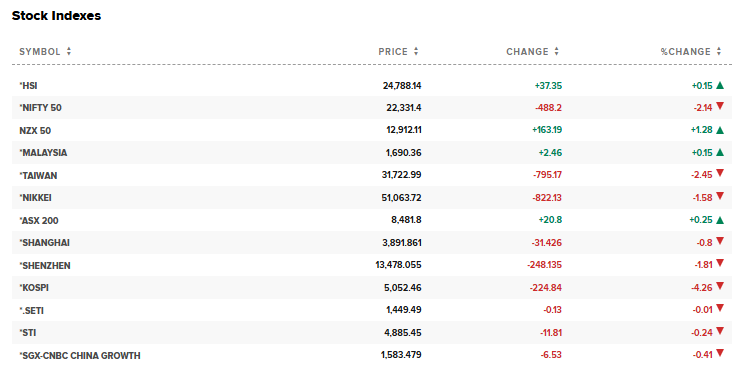
The South Korean won also weakened beyond 1,500 per dollar, hitting levels not seen since the past financial crisis. This decline reflected a broader risk‑off mood that spread across Asia, despite some early strength in the year from technology and export sectors.
Markets in Japan, China, India, and Australia also fell, with indexes like the Nikkei and TOPIX losing double‑digit percentages for the month. The markets are now grappling with inflation fears, supply‑chain disruption risks, and heightened uncertainty due to prolonged geopolitical tensions.
The Iran War Effect on Risk Sentiment
What is driving fear in markets?
The ongoing U.S.-Israel military engagement with Iran has pushed global risk sentiment sharply lower. After the war began in late February 2026, investors globally shifted toward safer assets. Oil prices surged, heading for record monthly gains, as the conflict raised fears of prolonged disruption to Middle Eastern supplies. Brent crude futures were set for a record 56% gain in March.
How does this affect stock prices?
Higher energy costs make inflation worse. This can reduce corporate profits and slow economic growth. In Asia, where many economies import energy, this effect is especially harmful. Coupled with global bond sell‑offs and U.S. dollar gains, equities have fallen sharply. Investors fear inflation, possible interest rate delays, and weaker future growth. This has strengthened safe‑haven demand for assets like gold while undermining risk‑linked stocks.
Case Study – South Korea’s Market Meltdown
Why has KOSPI fallen so sharply?
South Korea’s market has been hit hardest in Asia. The KOSPI slipped nearly 20% in March, largely because of fear‑driven selling and a risk‑off shift. Heavy foreign selling hit big tech and export names hardest. Major firms such as Samsung Electronics and SK Hynix saw share prices fall significantly.
Is the market fundamentally weak?
Despite the downturn, some analysts argue the sell‑off is temporary and sentiment‑driven, rather than a sign of long‑term weakness. Before the war, South Korean equities had strong earnings expectations, especially in sectors tied to AI and global demand.
Analysts see value in fundamentals that could attract buyers once risk appetite returns. Markets may rebound when geopolitical tensions ease or if oil price pressures subside. AI stock analysis tools are currently showing support levels for key stocks at recent lows.
How are policymakers responding?
Seoul has proposed a $17.3 billion supplementary budget to support the economy. This includes assistance against rising fuel costs and direct support for consumers and businesses hit by conflict‑related disruptions. These measures aim to cushion growth and stabilize sentiment at a critical moment for Asia’s fourth‑largest economy.
Currency & FX Impacts
Asia’s currency markets have mirrored the volatility in equity markets. Most regional currencies were on track for monthly losses in March, hurt by risk‑off flows and broad U.S. dollar strength. The Korean won weakened sharply, trading at levels not seen in years against the dollar. Other currencies like the Indian rupee and Indonesian rupiah also faced downward pressure.
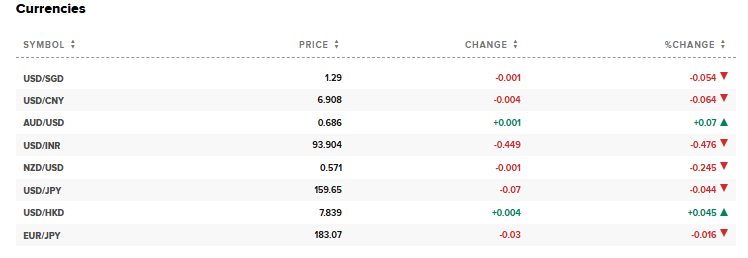
The U.S. dollar headed for its strongest gain in eight months as investors moved capital out of emerging markets and into safe assets. Despite relatively strong economic data from China, Asian currencies struggled because traders feared inflation and higher global energy prices. Central banks in the region face the dual challenge of defending their exchange rates while managing inflationary pressures.
Forward Outlook: What to Watch in April
Can the Iran war de‑escalate?
Investors will watch for any signs that the conflict might ease. News on peace efforts or reduced hostilities could relieve pressure on oil supplies and risk sentiment. In contrast, continued conflict near key shipping routes like the Strait of Hormuz would keep energy price risks elevated.
Economic data triggers
China’s upcoming manufacturing and export data could hint at broader Asian growth momentum. Strong numbers might support risk assets if they counterbalance geopolitical fears.
Central bank decisions
Markets will also focus on interest rate guidance from the Federal Reserve, Bank of Japan, and Reserve Bank of India. If rate cuts are delayed due to inflation fears, this could continue to weigh on equities.
Final Words
Asia’s markets are under intense pressure as geopolitical conflict and rising energy costs reshape investor expectations. The South Korean sell‑off highlights broader risk aversion, but fundamentals in several economies remain intact.
As April unfolds, the focus will be on energy price trends, policy moves, and geopolitical signals that could restore confidence. With global risk sentiment still fragile, investors should watch key indicators that may signal a shift in the market’s direction.
Frequently Asked Questions (FAQs)
Asian stocks fell in March 2026 due to Iran war fears, rising oil prices, and global investor risk concerns.
South Korea’s KOSPI dropped nearly 20% in March 2026 as foreign investors sold shares amid war and oil price spikes.
High oil prices in March 2026 increased costs for Asian companies, hurting profits and causing broad stock market declines.
Disclaimer:
The content shared by Meyka AI PTY LTD is solely for research and informational purposes. Meyka is not a financial advisory service, and the information provided should not be considered investment or trading advice.
What brings you to Meyka?
Pick what interests you most and we will get you started.
I'm here to read news
Find more articles like this one
I'm here to research stocks
Ask our AI about any stock
I'm here to track my Portfolio
Get daily updates and alerts (coming March 2026)