On April 1, 2026, NASA launched Artemis II, the first crewed mission to travel beyond low Earth orbit since 1972. Over a 10-day journey, four astronauts flew around the Moon and back, reaching farther into space than any humans before. This historic flyby marked a major step in NASA’s Artemis program, which aims to return humans to the lunar surface later this decade.
The mission tested critical systems, from life support to deep-space navigation, under real conditions. But it was not just about technology; it was also about people, risk, and exploration. Artemis II shows that human space travel is entering a new era, and this mission offers a glimpse of what comes next.
Advertisement
Artemis II at a Glance: Mission Overview & Timeline
Launch, Duration & Crew
NASA launched Artemis II on April 1, 2026, from Kennedy Space Center in Florida. This mission lasted about 10 days and marked the first crewed journey beyond low Earth orbit since 1972.
The four-member crew included:
- Reid Wiseman (Commander)
- Victor Glover (Pilot)
- Christina Koch (Mission Specialist)
- Jeremy Hansen (Canadian Space Agency astronaut)
This diverse crew made history. It included the first woman, the first Black astronaut, and the first non-American to travel around the Moon.
Mission Phases Timeline
The mission followed a clear sequence:
- Day 1-2: Earth orbit checks and system validation
- Day 3: Translunar injection (spacecraft heads toward the Moon)
- Day 4-5: Deep space travel and onboard testing
- Day 5-6: Lunar flyby and far-side pass
- Day 7-9: Return journey to Earth
- Day 10: Reentry and splashdown in the Pacific Ocean
Each phase tested critical systems needed for future lunar landings.
Historic Milestone: First Crewed Lunar Flyby in 50 Years
Why is Artemis II historically important?
Artemis II is the first crewed mission to leave low Earth orbit since Apollo 17 in 1972. That is a gap of more than 50 years.
The mission achieved:
- First human lunar flyby of the modern era
- First crewed test of the Orion spacecraft in deep space
- A key step before landing astronauts on the Moon again
NASA designed this mission to reduce risks for future missions. It focused on real-world testing instead of simulation. This success confirms that long-distance human space travel is possible again.
Record-Breaking Journey: Farthest Distance Ever Traveled by Humans
How far did Artemis II travel?
The Artemis II crew traveled more than 250,000 miles (about 406,000 km) from Earth. This broke the previous record set by Apollo 13 in 1970. Key numbers:
- Total journey: about 694,000 miles round trip
- Maximum distance from Earth: over 250,000 miles
This distance matters because:
- It proves humans can safely travel deep into space
- It supports future missions to Mars
- It validates long-duration navigation systems
This mission pushed human exploration farther than ever before.
The Lunar Flyby: Closest Approach & Far-Side Exploration
How close did Artemis II get to the Moon?
The spacecraft passed within 4,000 to 6,000 miles of the Moon’s surface. It used a free-return trajectory, which means gravity helped guide it back to Earth safely.
What did astronauts observe during the flyby?
Astronauts captured:
- High-resolution images of the Moon’s far side
- Views of the lunar south pole
- Visual data of surface features and craters
This was important because:
- Humans can observe details that machines may miss
- It helps plan landing sites for Artemis III
- It improves mapping accuracy
The far side of the Moon remains one of the least explored regions.
Communication Blackout & Deep Space Challenges
What happens during the Moon blackout?
During the flyby, the spacecraft passed behind the Moon. This caused a communication blackout of about 40 minutes. During this time:
- No contact with Earth
- The crew relied on onboard systems
- Mission control waited for the signal return
Why is this important?
This blackout tested:
- Autonomous spacecraft control
- Crew decision-making
- System reliability in isolation
Minor technical issues were reported, but nothing critical. The mission showed strong performance under real deep-space stress.
Human Moments in Space: Emotion, Culture & Firsts
What made Artemis II special on a human level?
This mission was not just technical. It had strong emotional and cultural moments. Key highlights:
- Christina Koch became the first woman to travel around the Moon
- Victor Glover became the first Black astronaut on a lunar mission
- Jeremy Hansen became the first non-American to orbit the Moon
Other moments:
- Crew shared personal reflections from space
- They captured photos and videos for the public
- They honored past Apollo astronauts
These moments made the mission relatable and inspiring.
Technology & Systems Tested on Artemis II
What systems were tested during the mission?
Artemis II focused heavily on system validation. Key systems tested:
- Life support systems for long-duration missions
- Radiation protection in deep space
- Navigation and guidance systems
- Communication technologies, including advanced data transfer
The spacecraft also tested reentry at speeds near 25,000 mph.
Why does this matter?
These tests ensure:
- Astronaut safety
- Mission reliability
- Readiness for lunar landing missions
This mission confirmed that Orion is ready for future exploration.
Splashdown & Safe Return: Mission Success Confirmed
How did Artemis II end?
The mission ended with a successful splashdown in the Pacific Ocean on April 10-11, 2026. Key details:
- Precise reentry landing
- Safe crew recovery by the U.S. Navy
- Immediate medical checks
Astronauts experienced:
- Temporary difficulty walking due to gravity readjustment
- Normal post-mission physical effects
The safe return confirmed mission success and system reliability.
What Artemis II Means for the Future of Space Exploration?
What comes next after Artemis II?
Artemis II is a stepping stone for future missions. Next goals include:
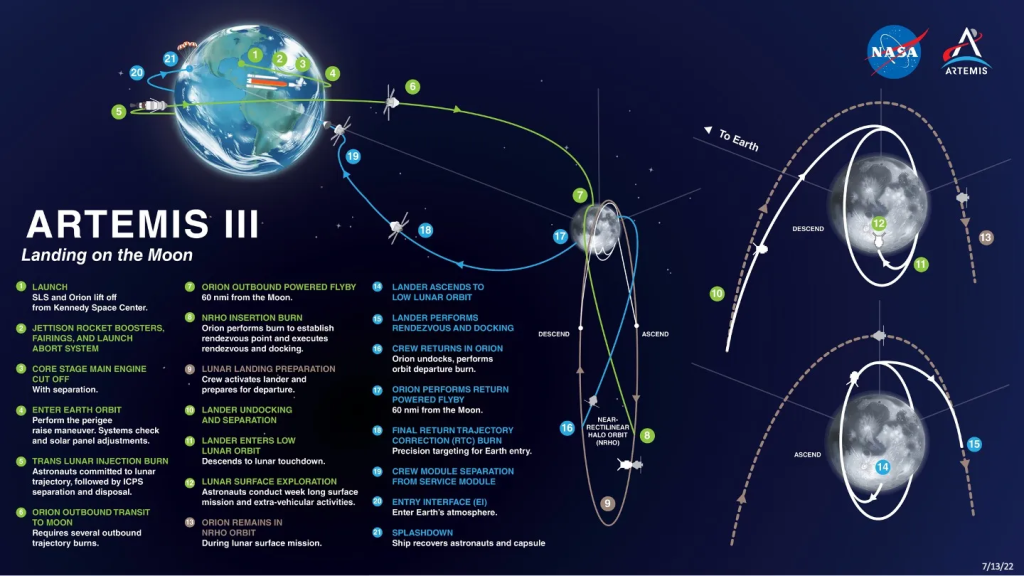
- Artemis III: Human landing on the Moon
- Building a sustainable lunar base by 2028
- Preparing for human missions to Mars in the 2030s
How does this impact global space exploration?
The mission strengthens:
- International collaboration
- Long-term space exploration strategy
- Confidence in human deep-space missions
Modern platforms like an AI stock analysis tool also track companies involved in space technology, showing growing investor interest in this sector.
What do experts say?
Space analysts agree:
- Artemis II is a “proof-of-concept success.”
- It reduces risk for future missions
- It signals a new era of space exploration
The mission marks a shift from testing to expansion.
Conclusion
Artemis II proves that human deep-space travel is back. The mission successfully tested systems, set new records, and prepared the path for a Moon landing. It marks a strong step toward long-term lunar exploration and future missions to Mars.
Advertisement
Frequently Asked Questions (FAQs)
Artemis II, launched April 1, 2026, is NASA’s first crewed Moon flyby mission since 1972, testing systems for future landings.
Artemis II traveled over 250,000 miles from Earth in April 2026, setting a new record for the farthest human spaceflight distance.
NASA plans to land astronauts on the Moon with Artemis III, currently targeted for 2027 or later, depending on mission readiness and testing.
Disclaimer:
The content shared by Meyka AI PTY LTD is solely for research and informational purposes. Meyka is not a financial advisory service, and the information provided should not be considered investment or trading advice.
Advertisement
What brings you to Meyka?
Pick what interests you most and we will get you started.
I'm here to read news
Find more articles like this one
I'm here to research stocks
Ask Meyka Analyst about any stock
I'm here to track my Portfolio
Get daily updates and alerts (coming March 2026)