Air Canada has suspended all flights to Cuba after Cuba warned that aviation fuel would not be commercially available starting February 10, 2026. The disruption reflects a deeper regional energy crisis tied to blocked oil supplies and tightening sanctions. Airlines must now cancel routes, reroute aircraft, or carry extra fuel.
For investors, this event highlights operational risk in airline stocks and tourism-dependent markets. The sudden halt also shows how geopolitical supply shocks can quickly affect airline revenue visibility and travel demand.
Advertisement
Air Canada Halts Cuba Operations
Immediate Suspension and Repatriation Plans
Air Canada confirmed it suspended Cuba service effective February 9, 2026, due to unreliable aviation fuel availability at Cuban airports. The airline plans empty southbound flights to return roughly 3,000 stranded passengers to Canada.
The carrier previously operated about 16 weekly flights from Toronto and Montreal to destinations in Cuba. Two seasonal routes are cancelled, and two year-round routes are suspended, with a tentative restart targeted for May 1, 2026. This shows how quickly fuel logistics can reshape airline scheduling and near-term revenue expectations.
Wider Airline Industry Disruption
Multiple Carriers Adjust Routes or Suspend Service
Canadian airlines, including WestJet and Air Transat, also suspended or adjusted Cuba operations as the jet-fuel shortage intensified between February 10 and March 11, 2026.
Some international carriers now plan technical refueling stops outside Cuba to maintain limited service, while others cancel routes entirely.
The disruption extends beyond Canada, affecting airlines from Europe, Russia, and other regions that depend on Cuban refueling infrastructure. For investors, this underscores sector-wide exposure to geopolitical energy constraints rather than company-specific weakness.
Root Cause: Cuba’s Aviation Fuel Crisis
Sanctions, Oil Supply Cuts, and Energy Shortages
Cuba’s aviation fuel shortage stems from restricted oil shipments, particularly reduced Venezuelan supply under intensified U.S. sanctions pressure.
Official aviation notices warned that Jet A-1 fuel would be unavailable at major airports for roughly one month starting February 10, 2026. The broader national energy crisis is already straining tourism, transportation, and economic stability across the island. This highlights how macro-political dynamics can directly disrupt airline route economics and regional tourism flows.
Market and Investor Implications for Air Canada
Operational Risk and Revenue Visibility
Airline suspensions reduce short-term passenger revenue and increase logistical costs such as ferry flights and rerouting.
However, U.S. carriers that carry sufficient round-trip fuel continue operating, showing uneven competitive impact across the sector. Investor sentiment may therefore hinge on route diversification, fuel strategy, and geopolitical exposure rather than demand trends alone.
Looking ahead, airline earnings guidance could remain volatile until Cuban fuel supply stabilizes.
Recent Updates (February 2026) on Air Canada
- Air Canada suspended Cuba service immediately and began repatriation flights for about 3,000 travelers.
- Fuel is expected to be unavailable from February 10 to March 11, 2026, forcing cancellations across several airlines.
- International carriers reroute or refuel abroad to sustain limited operations.
- Tourism and local transport disruptions intensify as Cuba’s energy crisis deepens.
- Potential service restart around May 2026 remains conditional on fuel recovery.
These developments confirm a fast-moving operational shock affecting airline scheduling and regional tourism economics.
Market Sentiment and Social Signals
Discussion across travel communities highlights uncertainty around cancellations, profitability, and passenger safety during the fuel shortage.
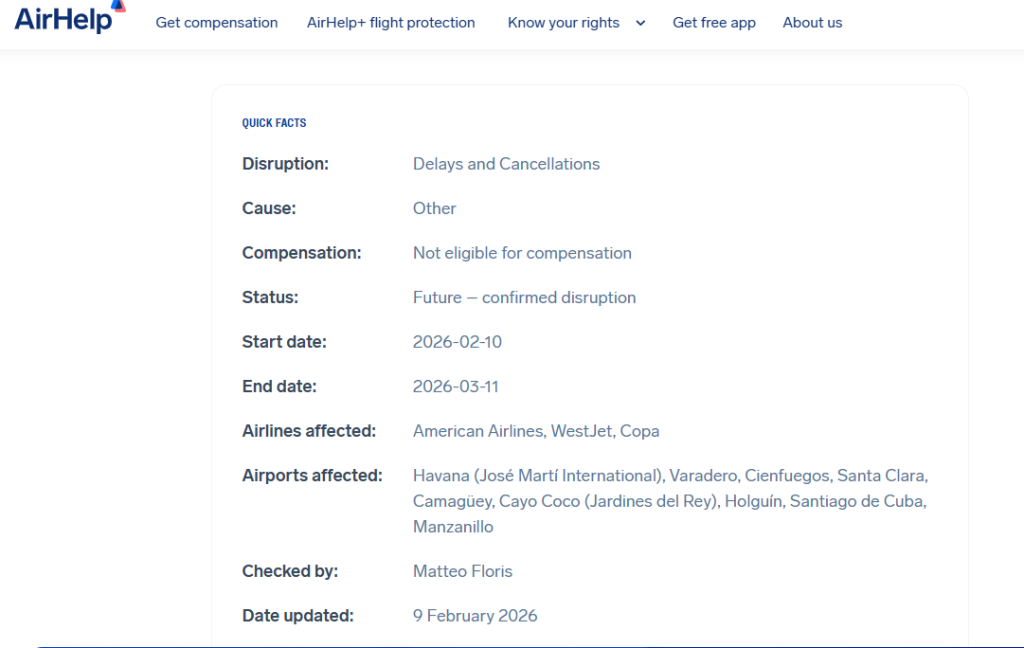
This sentiment reflects investor concern about operational reliability and near-term airline margins.
Conclusion
Air Canada’s Cuba flight suspension illustrates how geopolitical fuel disruptions can rapidly affect airline operations, tourism demand, and investor confidence. The crisis is sector-wide, not company-specific, but revenue visibility remains uncertain until fuel supply stabilizes.
Airlines with diversified routes and flexible refueling strategies may outperform during disruptions. For investors, monitoring energy policy, regional stability, and airline guidance will be critical in assessing near-term volatility and long-term recovery potential.
Advertisement
Frequently Asked Questions (FAQs)
Air Canada halted service because Cuban airports warned that aviation fuel would be unavailable starting February 10, 2026, making normal operations impossible.
Around 3,000 travelers required repatriation flights after the suspension announcement.
Yes. Several Canadian and international carriers suspended or rerouted flights during the February-March fuel shortage window.
Air Canada signaled a tentative restart around May 1, 2026, depending on fuel availability.
Yes. Route disruptions, added costs, and uncertain demand can influence short-term airline earnings and sentiment.
Disclaimer:
The content shared by Meyka AI PTY LTD is solely for research and informational purposes. Meyka is not a financial advisory service, and the information provided should not be considered investment or trading advice.
Advertisement
What brings you to Meyka?
Pick what interests you most and we will get you started.
I'm here to read news
Find more articles like this one
I'm here to research stocks
Ask our AI about any stock
I'm here to track my Portfolio
Get daily updates and alerts (coming March 2026)